
What does tooth mean on a cigar wrapper?
Short answer: Tooth is the fine, bumpy or grainy texture on some cigar wrapper leaves. A wrapper with noticeable tooth is called “toothy.” The term describes the tobacco’s surface, not how strong the cigar is.
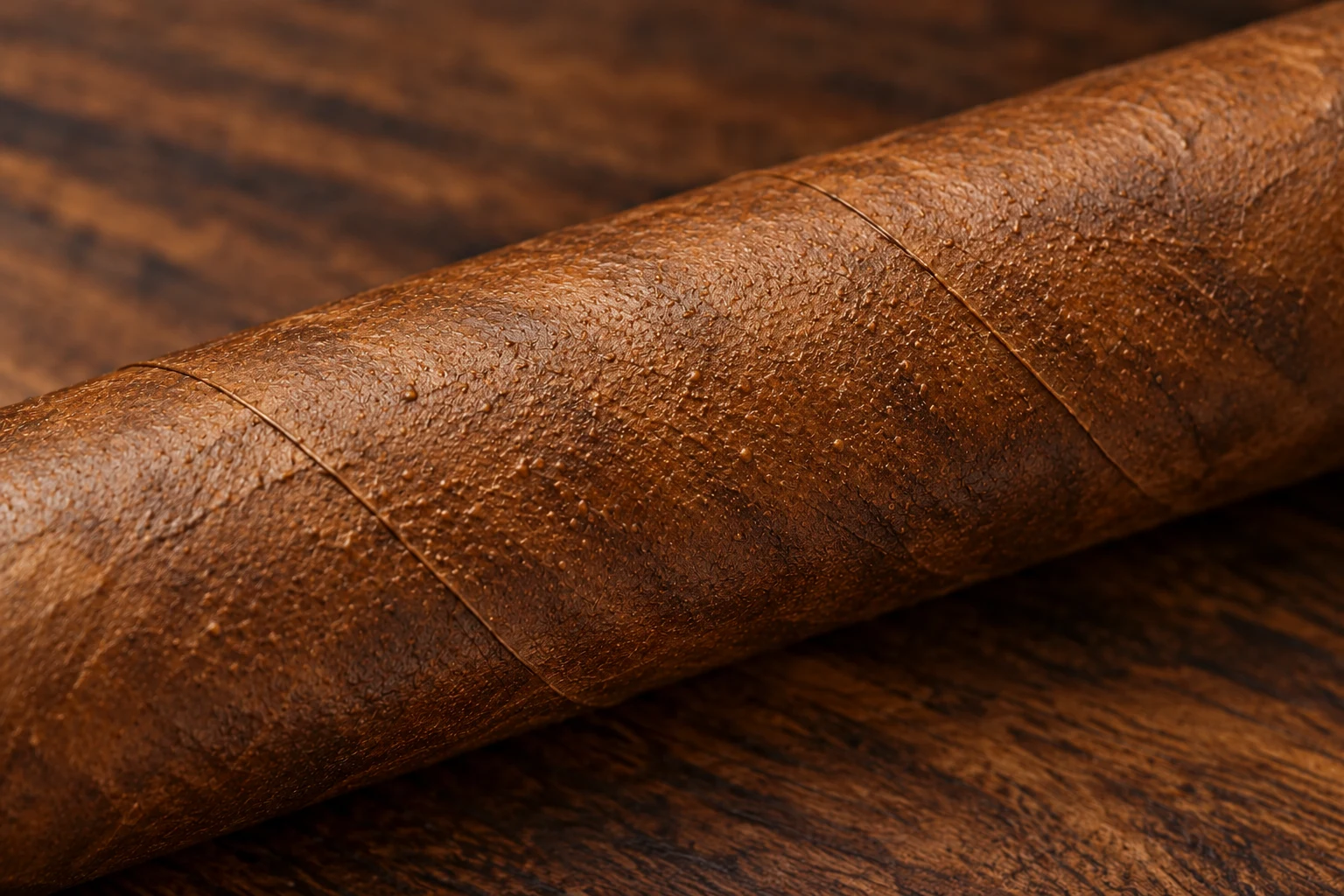
What does tooth look and feel like?
Look for small raised dots across the wrapper rather than a completely silky surface. Under light from the side, the texture may resemble very fine grain. A wrapper can look fairly smooth from a distance and reveal tooth when examined closely.
The word does not refer to a bite mark. It also does not mean the long branching veins in a tobacco leaf or the overlapping seam where the wrapper spirals around the cigar. Those are separate features.
What causes the bumps?
Cigar references commonly describe tooth as small pockets of tobacco oil that develop naturally in the leaf. The texture belongs to the wrapper itself; it is not a coating added to the finished cigar. Cigar Aficionado uses this explanation in its guide to toothy wrappers.
Which wrappers have tooth?
Cameroon is particularly associated with the texture. Connecticut Broadleaf and some Indonesian wrappers can also show it. By comparison, Connecticut Shade is often described as silky. These are useful examples, not a rule that every leaf with a given name must look identical.
For more on the difference between tobacco names, growing regions, and processing terms, see our guide to cigar wrapper types.
Does a toothy wrapper mean a better or stronger cigar?
Tooth is a normal characteristic, not automatically a defect. Cigar writers often associate it with flavorful, oil-bearing leaf. That does not make the number of visible bumps a quality score or a reliable prediction of what you will enjoy.
Do not use texture alone to assign nicotine strength, promise particular tasting notes, or judge the whole cigar. The wrapper is one component of a blend that also includes binder and filler. Record “toothy wrapper” as an observation, separately from your impressions of flavor, construction, and strength.
Why might the ash show tiny white dots?
A toothy wrapper can leave small pale dots embedded in the ash as it burns. Cigar Aficionado notes that similar dots can appear even when tooth was not obvious on the unlit leaf. The ash is another observation, not proof of a particular origin or grade.
How to recognize it without overthinking it
Inspect the unlit wrapper under good light and turn it slightly to see the surface. Distinguish the tiny bumps from larger veins and the spiral seam. Avoid scraping or rubbing the delicate leaf to investigate it.
Use the word narrowly: “toothy” describes a textured wrapper. It does not establish that an unfamiliar deposit or discoloration is normal, and an illustration cannot identify the condition of a particular cigar.
References: Cigar Aficionado: What Exactly Is a Toothy Wrapper? and Cigar Advisor: What Makes Some Cigar Wrappers “Toothy?”.
Cigar Path does not sell tobacco or publish cigar reviews. This guide is for adults of legal tobacco-purchase age.