
How to smoke and light a cigar for beginners
Short answer: Cut cleanly, toast and light the foot evenly, draw slowly without inhaling, and give the cigar time between puffs so it stays cool and burns consistently.
1. Make a clean cut
Inspect the wrapper and cut conservatively above the cap line. You only need enough opening for a comfortable draw. For tool choices and technique, see Cigar cutters explained.
2. Toast the foot before puffing
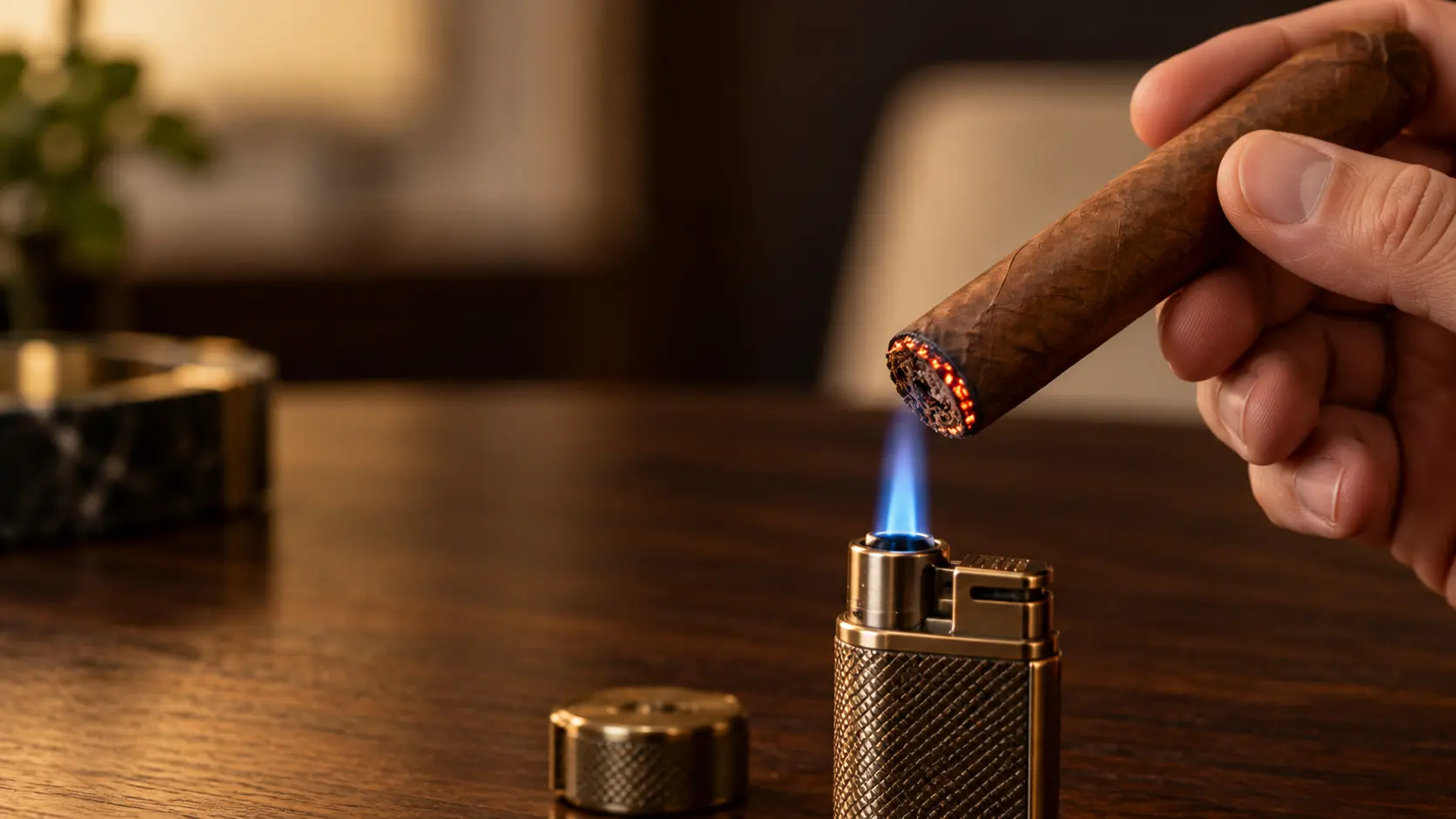
Hold the flame close enough to heat the open foot without burying the cigar in the flame. Rotate slowly so the outside edge warms evenly. The rim should darken and begin to glow.
3. Light while drawing gently
Bring the cigar to your mouth and take a few slow draws while keeping the flame just in front of the foot. Continue rotating. With a torch, use short controlled passes; a soft flame can sit a little closer because its heat is less concentrated.
4. Check the burn
Turn the foot toward you. An even orange-red ring means the cigar is lit. If one small section remains dark, touch up that area instead of reheating the entire foot.
Do not inhale cigar smoke
Cigar smoke is generally tasted in the mouth and then released rather than inhaled into the lungs. Draw gently, let the smoke move across the palate, and exhale.
How often should you puff?
There is no exact timer, but repeated fast puffs can overheat the cigar and make it taste harsher. A relaxed pace—often around a puff every minute or so—is a useful starting point. Let the cigar tell you if it is getting too hot.
Torch or soft flame?
Either can work. A torch is faster and easier outdoors but also easier to misuse. A soft flame is slower and more forgiving. Control matters more than the lighter type.
Can you relight a cigar?
Yes. If it goes out, remove loose ash and relight only what needs heat. You can gently clear stale smoke with a light outward breath through the cigar before toasting and relighting the foot. The longer a cigar sits extinguished, the more noticeable the relight may taste.
What should you do with the ash?
You do not need to knock ash off constantly. Let a reasonable ash form, then gently rest or tap it into an ashtray before it becomes unstable. When you are finished, set the cigar down and let it go out rather than crushing it like a cigarette.
What if the cigar feels too strong?
Stop rather than trying to finish it. Nicotine impact varies by blend and by the smoker. Our cigar strength guide explains why mild, medium, and full are broad categories rather than exact measurements.
Common beginner lighting mistakes
Avoid holding the cigar inside a powerful torch flame for an extended period, lighting only one side, or repeatedly blasting the whole foot to correct one dark spot. Those habits add heat and make an uneven burn more likely.
Further reading: Cigar Aficionado on lighting and its cigar basics primer.
Cigar Path does not sell tobacco or publish cigar reviews. This guide is for adults of legal tobacco-purchase age.